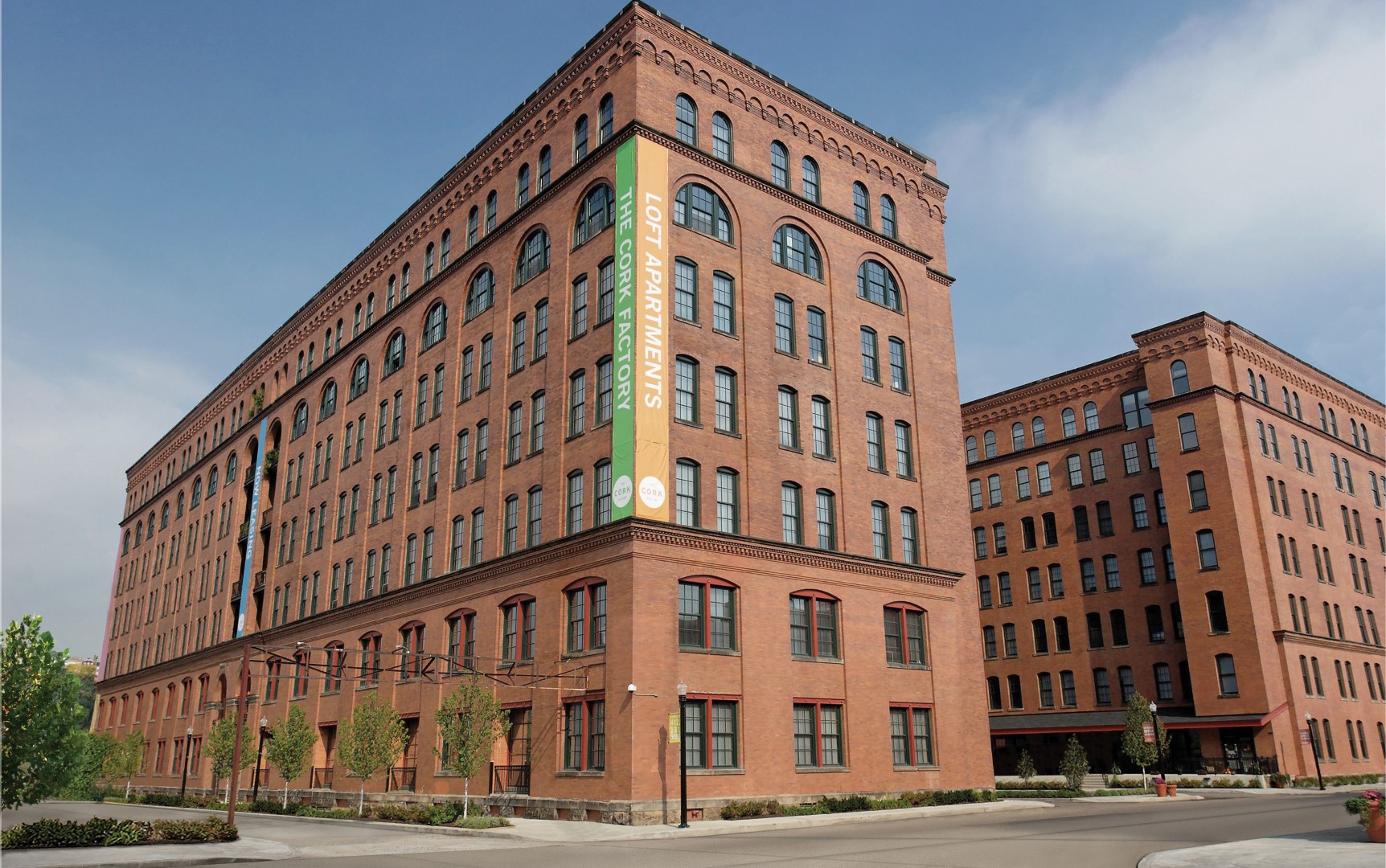
The Cork Factory is a 440,000-square-foot industrial complex in Pittsburgh's Strip District constructed in 1901 and expanded in 1913. Designed by Frederick Osterling in the Richardson Romanesque style, it served as the headquarters of the Armstrong Cork Company until 1974, after which it sat vacant for more than 30 years. When Big River Development undertook its conversion to mixed-use residential lofts, the project required extensive masonry and concrete restoration to return the weathered facades and deteriorated interiors to a structurally sound and visually compelling condition.
Graciano Corporation performed both exterior and interior restoration scopes across the two main buildings of the complex, along with specialty work on the historic smokestack -- a landmark feature of the Strip District skyline.
Scope of Work
Services Performed
- Exterior brick, stone, and terra cotta cleaning
- Graffiti removal
- Masonry repointing
- Damaged brick replacement
- Stone patching
- Terra cotta trim repair and replacement
- Exterior brick wall rebuilds (reception building)
- Smokestack reconstruction with new metal rings and stainless steel cap
- Pool coping installation
- Interior lead abatement
- Interior paint and graffiti removal
- Concrete ceiling stabilization
- Elevator shaft reconstruction
- Concrete block wall construction
- Chemical and abrasive cleaning
- Caulking and waterproofing
Exterior Brick, Stone, and Terra Cotta
The Cork Factory's Romanesque brick facades had been exposed to the elements for decades of vacancy, accumulating atmospheric soiling, graffiti, and biological growth while mortar joints deteriorated and individual masonry units were damaged. Graciano cleaned the full exterior surfaces of both buildings using chemical and abrasive methods appropriate to the brick, stone, and terra cotta materials present, including removal of extensive graffiti. Following cleaning, all failed mortar joints were repointed, damaged brick units replaced in kind, stone elements patched, and the distinctive terra cotta trim pieces repaired or replaced to restore the design character of the original facades.
Smokestack Reconstruction
The historic masonry smokestack, a defining feature of the Cork Factory's industrial identity, required structural reconstruction as part of the adaptive reuse project. Graciano's crews rebuilt the stack and installed new metal rings and a stainless steel cap, preserving the skyline landmark while ensuring it met the structural requirements of the converted use.
Interior Work
Interior restoration scopes included lead abatement, removal of paint and graffiti from interior surfaces, stabilization of concrete ceilings, reconstruction of elevator shafts, and concrete block wall construction. This work prepared the raw industrial interiors for conversion to residential lofts while addressing the legacy conditions left by the buildings' decades of vacancy.
About Graciano Corporation
Founded in 1916, Graciano Corporation is one of the oldest and most experienced masonry and concrete restoration firms in the United States. Headquartered in Pittsburgh, PA, with additional offices in New York, NY, and Florida, Graciano performs approximately 90% of all work in-house with its own skilled journeymen. The company is a WBENC-certified Woman Business Enterprise with extensive experience in Pittsburgh's historic industrial adaptive reuse projects.