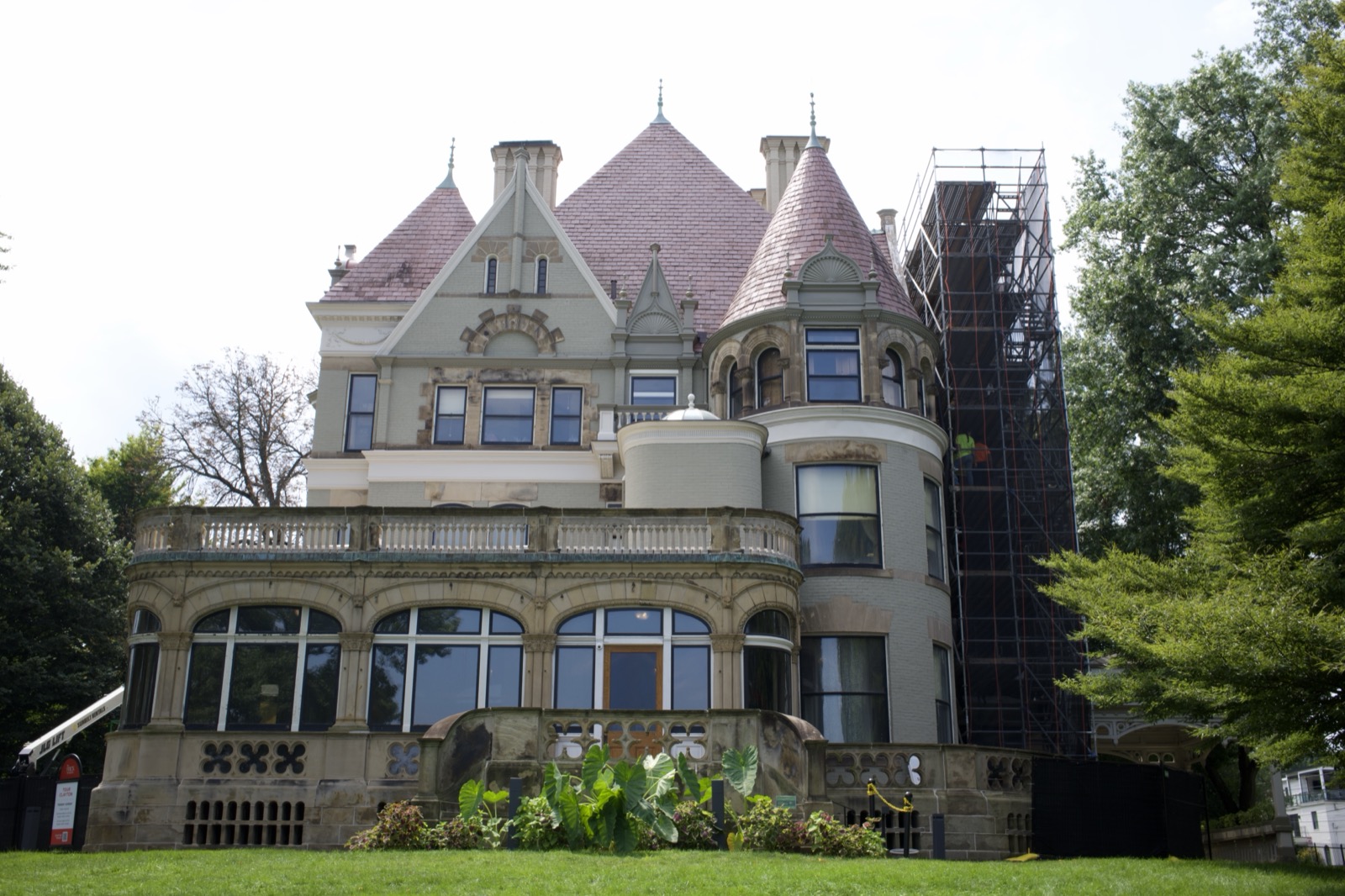
Clayton, the Frick family's house in Point Breeze, is back under scaffold. The house went up in the 1860s, was remodeled in 1892 by Frederick J. Osterling, and was home to the Frick family from 1883 to 1905. It is listed on the National Register of Historic Places as the Clayton-Frick Art Museum Historic District.
We restored the chimneys in 2022 and 2023. This year the work is on the walls.
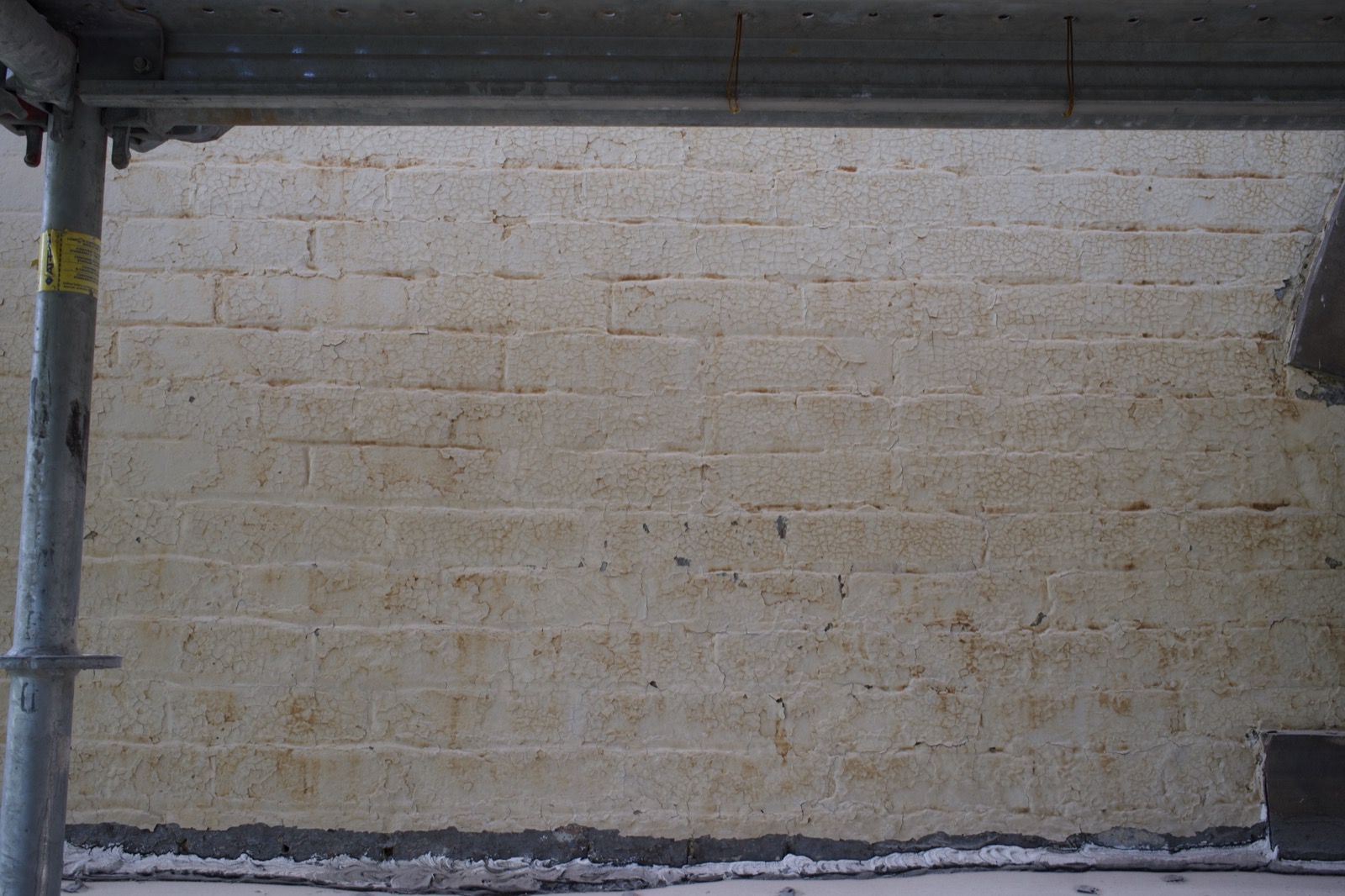
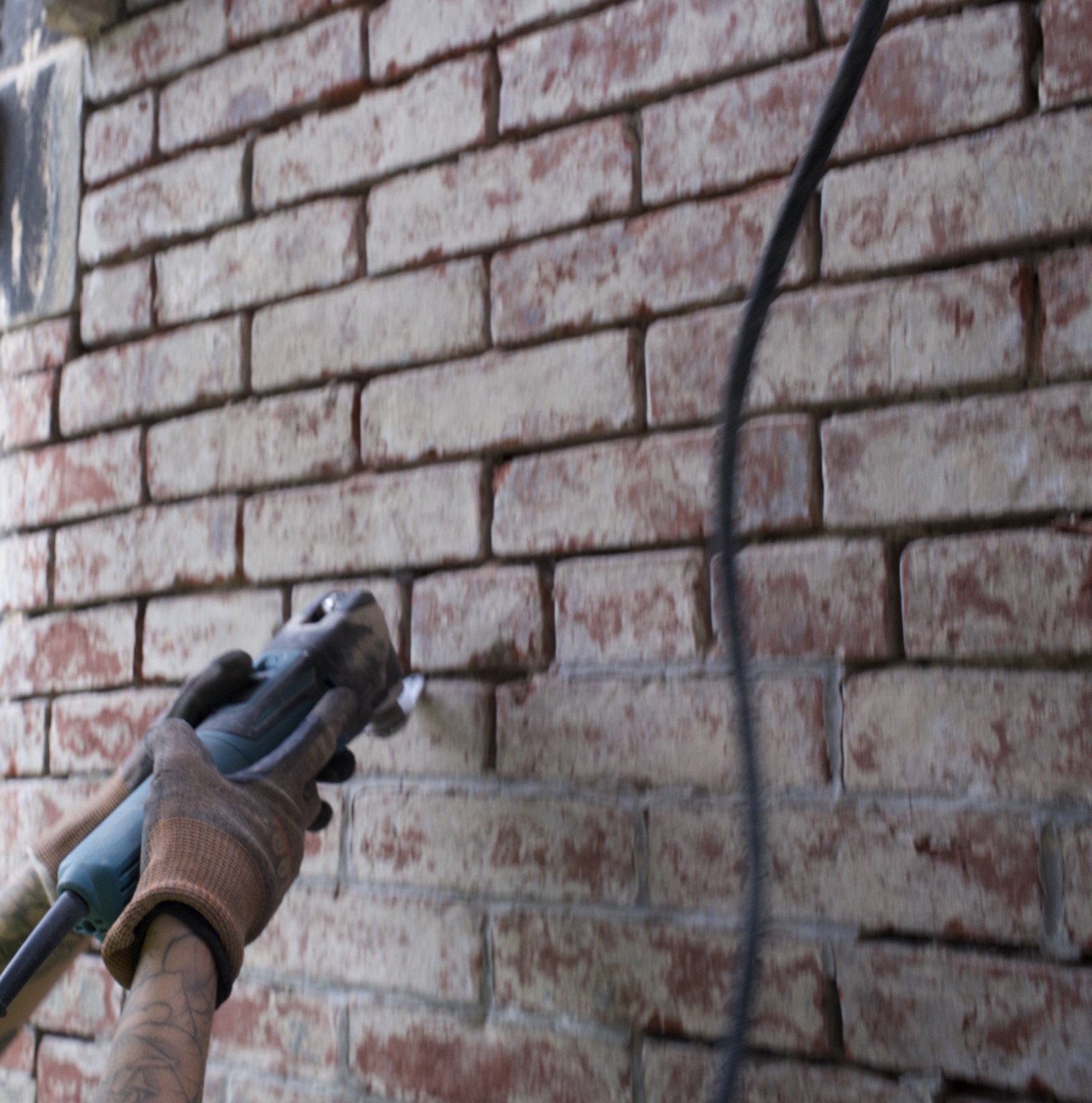
The Frick's own count on this house is nearly 20 layers and about 150 years of paint. Taking it off started with steam: boxes built in-house, run over sections of brick for about four hours at a time, then a crew in full PPE scraping the loosened paint away with plastic putty knives. What the steam did not take came off with SmartStrip, an encapsulating stripper. All of it went into lead containment bags and three sealed drums for disposal. Steam and hand scraping is slower than blasting. We chose it because it keeps lead paint out of the air on a museum property.
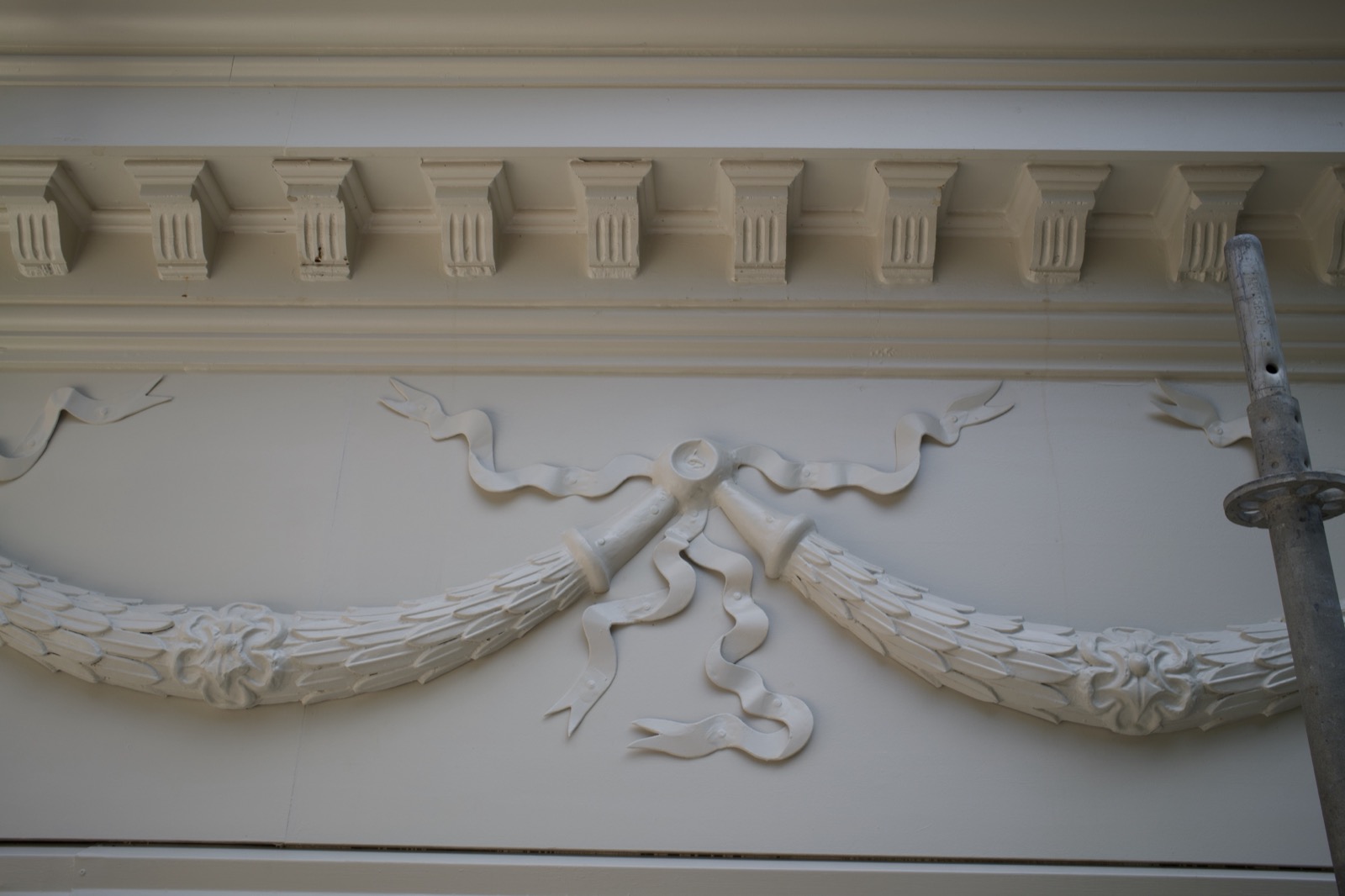
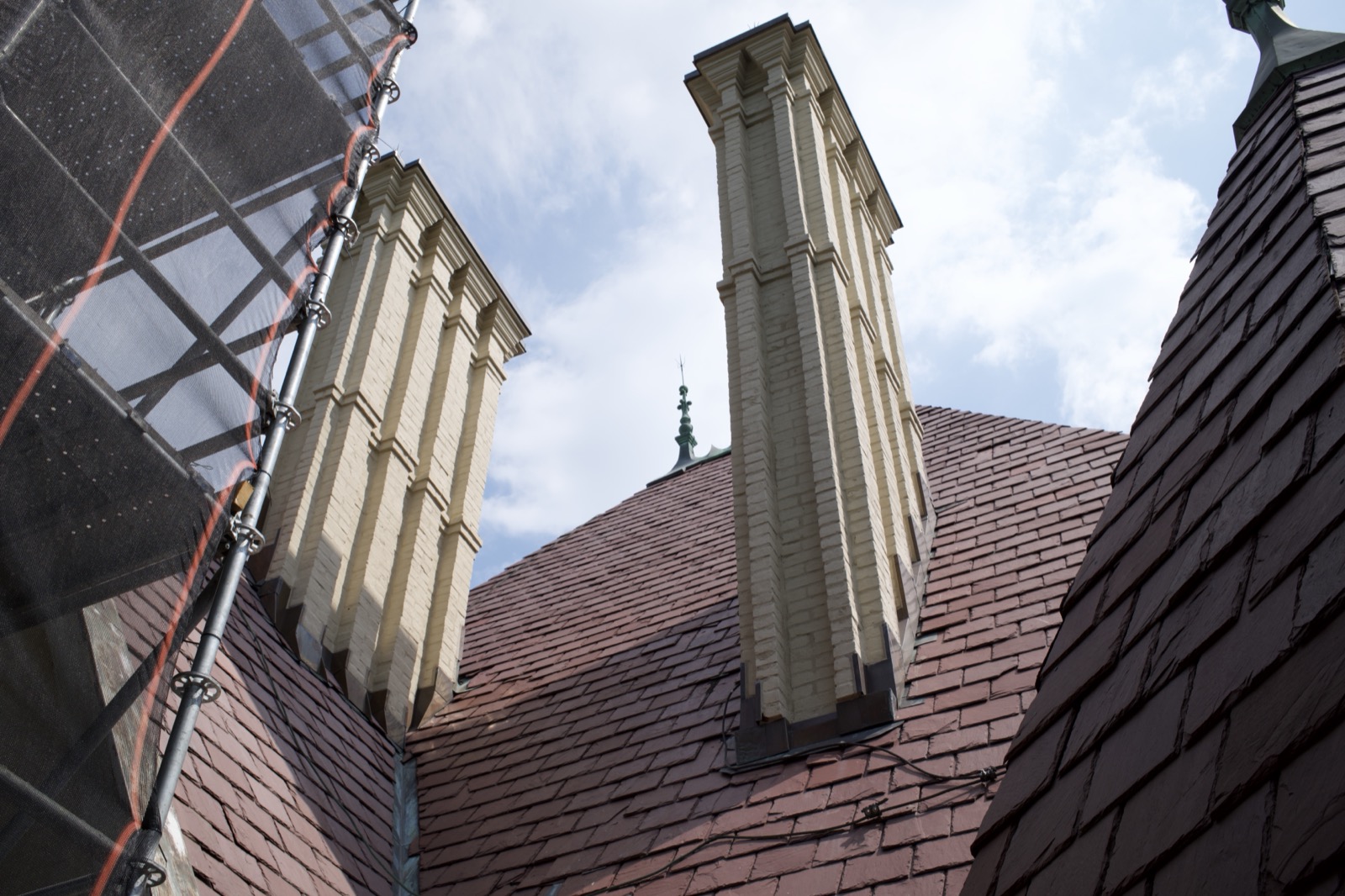
With the paint off, every joint gets cut out and repointed, then a Keim mineral silicate coating goes over the brick. Keim bonds into the brick instead of forming a film on top of it, so there is nothing to peel. The wood cornice above had its failed sections cut out and replaced with new wood, then caulk and paint. A dormer pediment with a shell fan ornament sits open to the flashing right now, and the windows stay masked in plastic through all of it.
Scope of Work
Exterior Walls, 2026
- Removal of exterior paint by steam and hand scraping, with an encapsulating stripper where steam alone did not clear it
- Lead containment and disposal of removed paint material
- Cutting out and repointing of brick joints
- Application of a Keim mineral silicate coating over the brick
- Repair and replacement of failed wood cornice sections, with caulking and repainting
About Graciano Corporation
Founded in 1916 and headquartered in Pittsburgh, Graciano Corporation is one of the oldest and most experienced masonry and concrete restoration firms in the United States. With offices in Pittsburgh, PA, New York, NY, and Florida, we perform 90% of all labor in-house with our own skilled journeymen. Graciano is a WBENC-certified Woman Business Enterprise with deep experience on lead-safe historic restoration work.