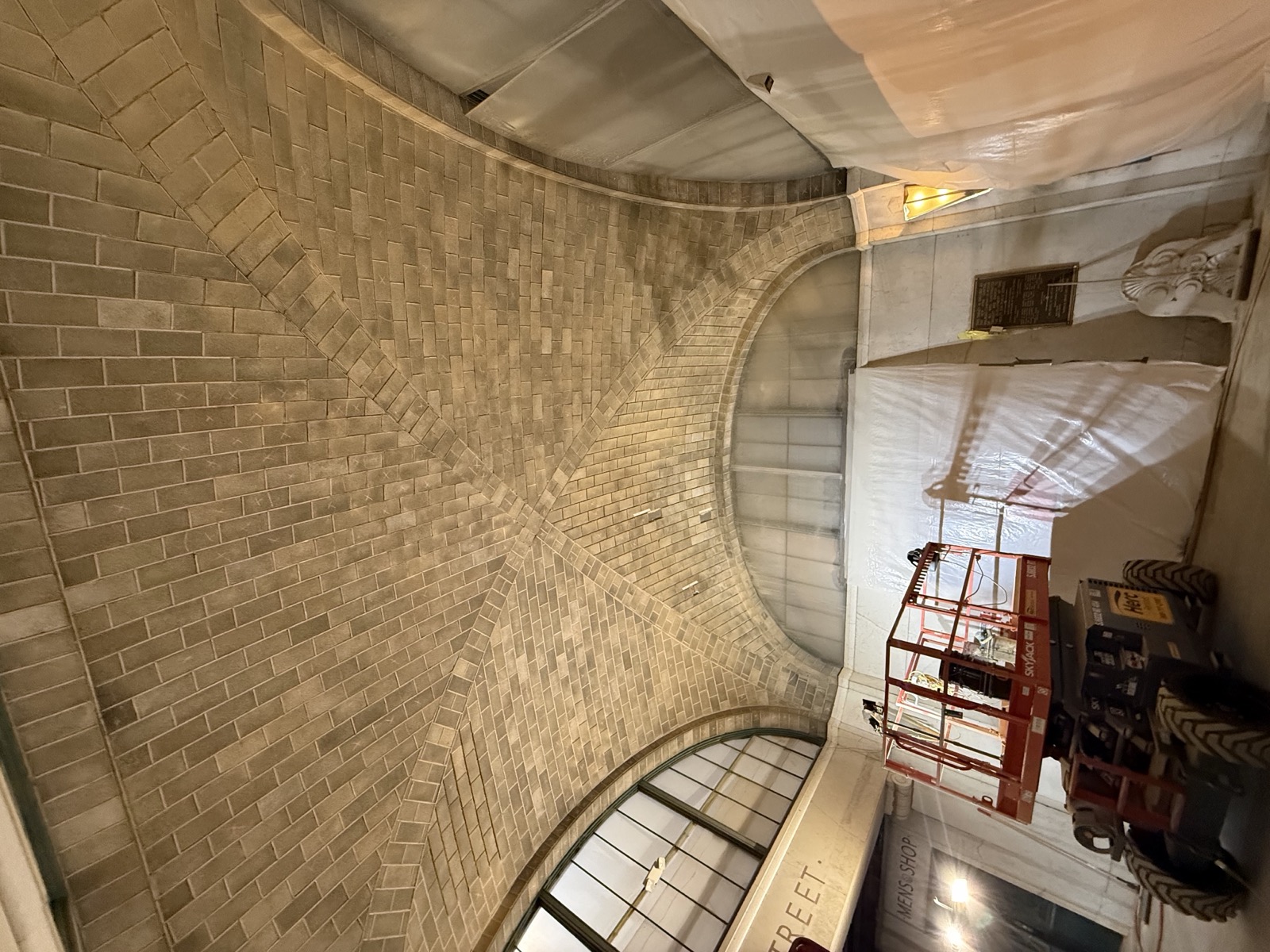
Graciano is on the entry lobby vault at Buffalo Central Terminal, an Art Deco rail terminal designed by Fellheimer and Wagner for the New York Central Railroad and opened in 1929. The terminal is listed on the National Register of Historic Places and stands as a City of Buffalo landmark. Our scope covers the entry lobby Guastavino vault only.
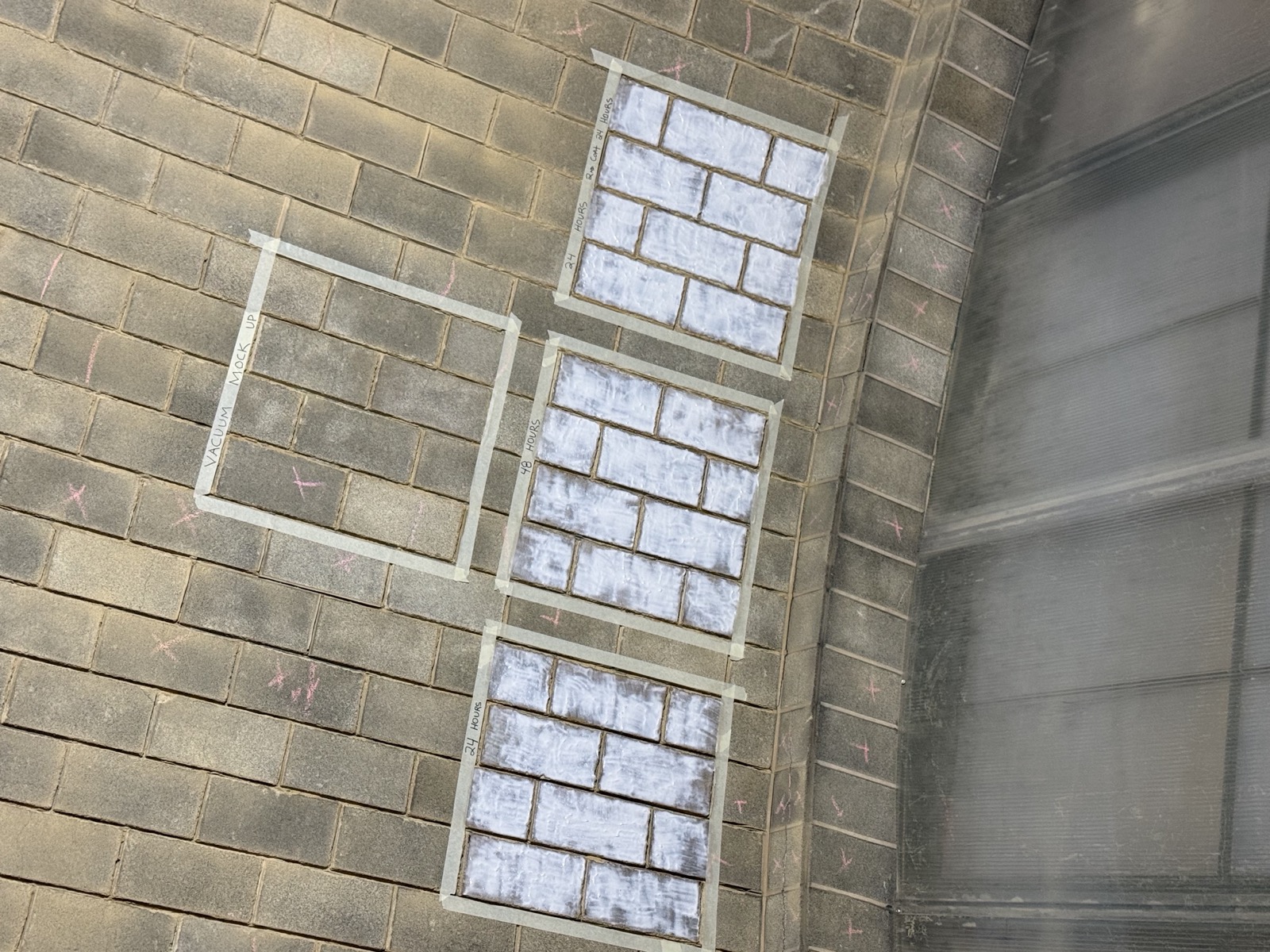
The vault is faced in Akoustolith, a tile Rafael Guastavino Jr. and the Harvard acoustician Wallace Sabine patented in 1916 to absorb sound. It is cement and pumice, close to 30 percent air by volume, and Buffalo Central Terminal has more of it than any other building. A material built to soak up noise soaks up soot just as well, so nothing goes to full scale until a method is proven on the wall first: four taped squares, one product run four different ways, read by the architect a day after the rinse.
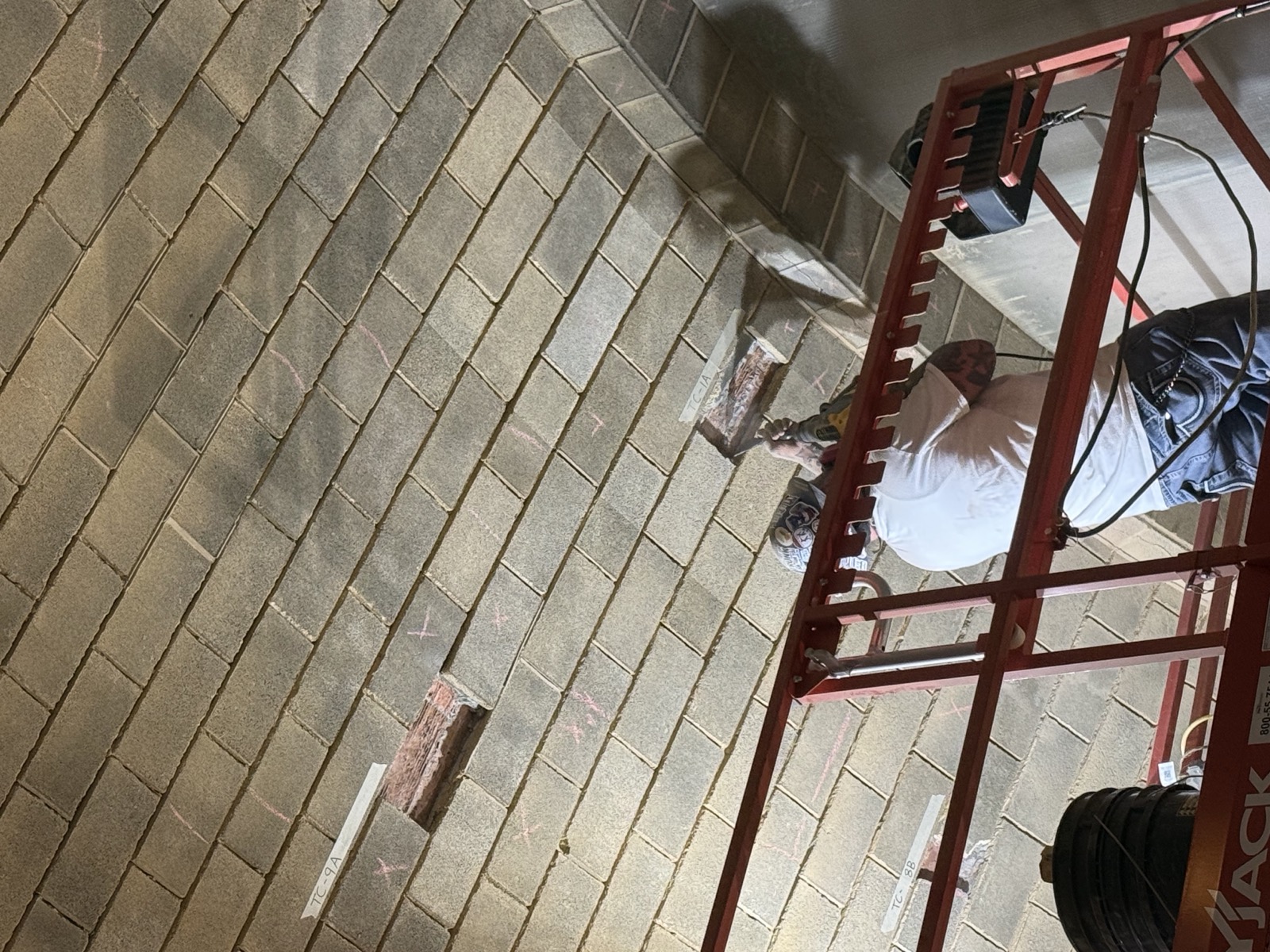
Three tiles have come out at tagged openings so far, exposing the red and orange structural clay tile behind the Akoustolith finish layer. Photographing and measuring that structural assembly while it is exposed is part of the documentation the job requires before anything closes back up.
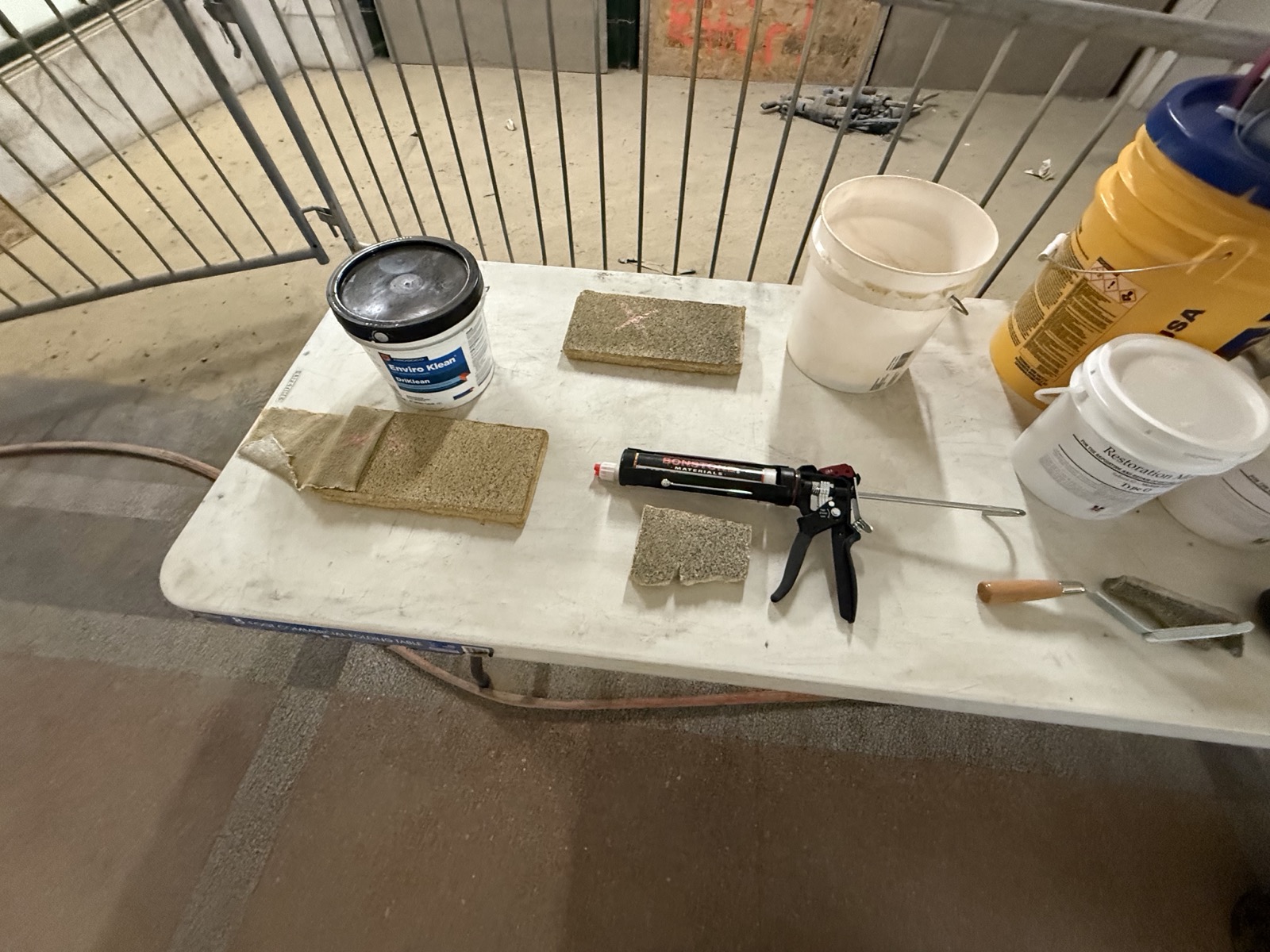
On the work table, cracked Akoustolith tiles that break clean and lift out in one piece get epoxy adhesive and go back into the course they came from. Past four square inches of surface loss, or a crack wider than 1/16 inch, a tile gets replaced instead of repaired. Every repair method on this job, tile removal and reinstallation, repointing, crack repair, gets proven on a mockup before it goes to the full vault.
Work is ongoing.
Scope of Work
Entry Lobby Vault
- Condition survey and documentation of the vault, tile by tile
- Removal, documentation, and reinstallation of Akoustolith finish tile at tagged openings
- Repointing of vault joints
- Epoxy repair of tiles that break clean, and replacement of tile past four square inches of loss or a crack wider than 1/16 inch
- Mockup testing of every repair method before full-scale work
About Graciano Corporation
Founded in 1916 and headquartered in Pittsburgh, Graciano Corporation is one of the oldest and most experienced masonry and concrete restoration firms in the United States. With offices in Pittsburgh, PA, New York, NY, and Florida, we perform 90% of all labor in-house with our own skilled journeymen. Graciano is a WBENC-certified Woman Business Enterprise and brings more than a century of Guastavino tile and historic masonry experience to every assignment.