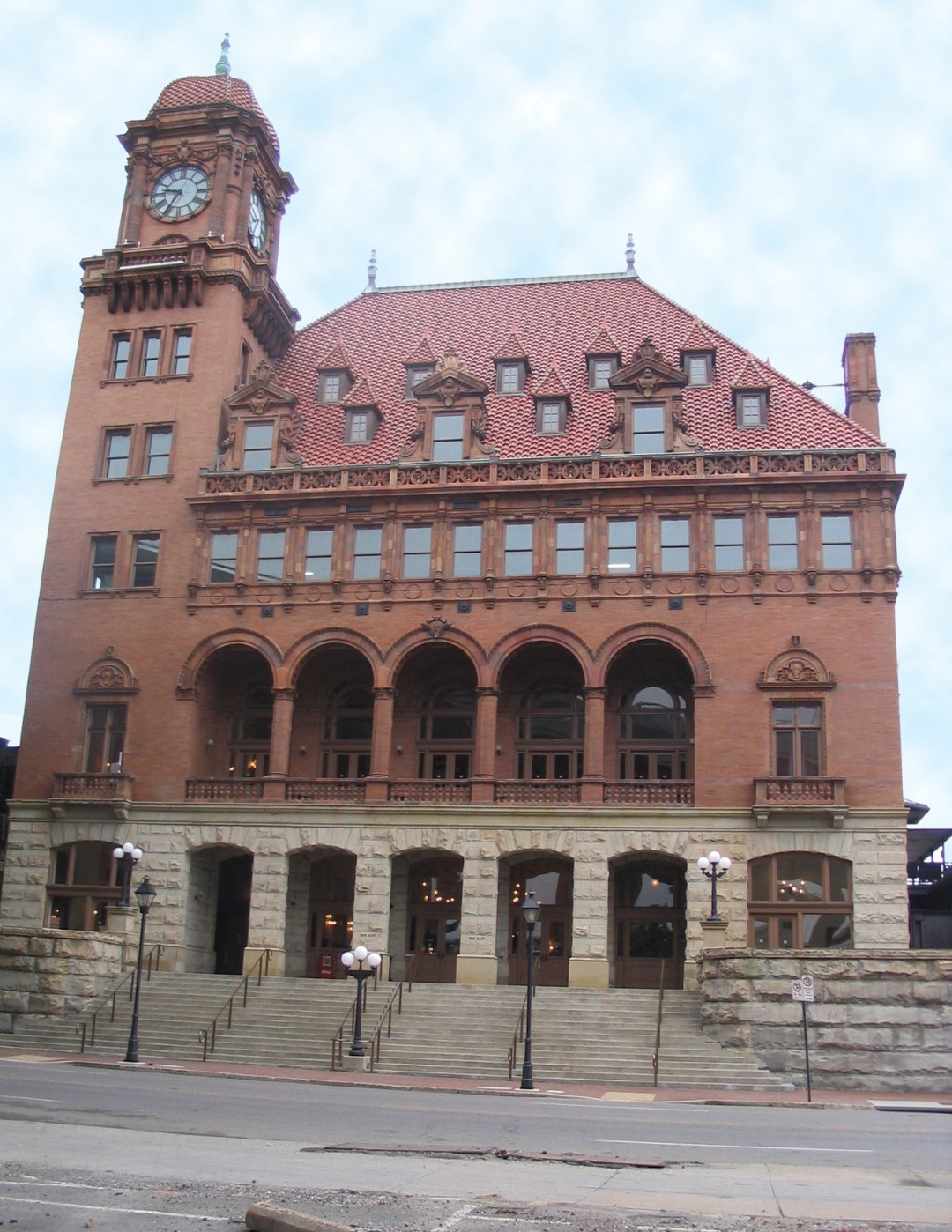
Main Street Station in Richmond, Virginia, was built in 1901 as a Beaux Arts passenger railroad station and has stood for more than a century as one of the city's most distinctive architectural landmarks. Owned by the City of Richmond, the station required comprehensive exterior masonry restoration to reverse decades of deterioration to its brick, stone, terra cotta, and ornamental elements. Graciano Corporation performed three phases of work on the project, with Phase One completed on time and within budget.
The project involved nearly every masonry restoration discipline: structural reinforcement of large ornamental terra cotta elements, replacement of deteriorated stone with custom-matched material, full repointing programs, and reconstruction of failed parapets and cornices. Gensler served as architect of record, with Daniel and Company as general contractor and URS as project manager.
Scope of Work
Services Performed
- Unit stone replacement
- Terra cotta removal and replacement
- Stone patching and Dutchman repairs
- Stone facade pinning
- Sealant installation
- Masonry repointing throughout
- Parapet and coping reconstruction
- Paint removal from masonry surfaces
- Masonry surface rehabilitation and cleaning
- Lintel replacement
- Individual brick replacement
- Balustrade reconstruction
- Stainless steel bracket installation for terra cotta cornice support
- Custom-cut Briarhill Sandstone foundation stone replacement
Terra Cotta Cornice and Dormer Restoration
The most structurally demanding element of the Main Street Station restoration was the large terra cotta cornice and an ornamental dormer at upper roof level. Over time, the original anchoring system for the cornice had corroded and loosened, leaving sections of heavy terra cotta insufficiently supported. Graciano's team installed stainless steel brackets designed to re-anchor the restored cornice to the building structure without altering its historic profile. The dormer, which had sustained significant damage, was stabilized and its terra cotta elements were removed, repaired, and reinstalled.
Stone Replacement and Foundation Repair
Deteriorated Briarhill Sandstone foundation stones were among the most visible failures on the building's base. Because Briarhill Sandstone is a distinctive material with a recognizable color and texture, replacement stones were custom-cut to match the original in profile, surface finish, and material. This level of material matching is standard practice for Graciano on historic buildings where visual continuity between original and repaired material is essential to the building's integrity.
Balustrade Reconstruction
The station's ornamental balustrades had deteriorated to the point of requiring reconstruction. Graciano rebuilt the balustrades to match the original design, coordinating with the architect and the historic documentation to reproduce the profiles and dimensions of the original elements. Repointing work completed the restoration of the rebuilt balustrades and their surrounding masonry.
About Graciano Corporation
Founded in 1916, Graciano Corporation is one of the oldest and most experienced masonry and concrete restoration firms in the United States. Headquartered in Pittsburgh, PA, with additional offices in New York, NY, and Florida, Graciano performs approximately 90% of all work in-house with its own skilled journeymen. The company is a WBENC-certified Woman Business Enterprise with a long record of historic railroad stations, civic buildings, and landmark restoration projects across the eastern United States.