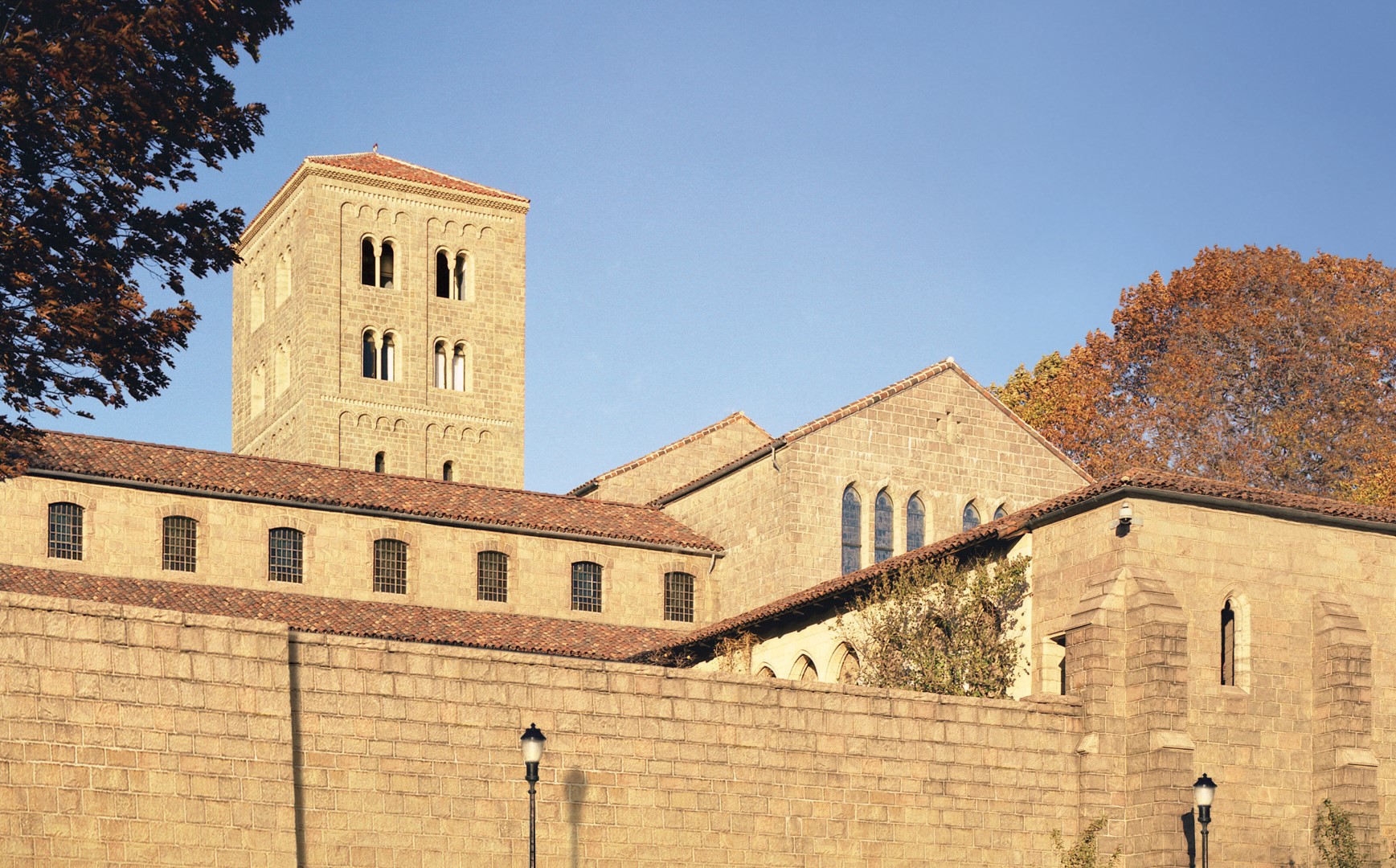
The Cloisters, a branch of the Metropolitan Museum of Art dedicated to medieval European art and architecture, occupies a distinctive stone complex in Fort Tryon Park at the northern tip of Manhattan. The building was constructed in the 1930s and incorporates architectural elements from several medieval French monasteries, reassembled within a structure designed by architect Charles Collens. The result is one of the most architecturally unusual properties in New York City, blending medieval stone masonry with a purpose-built modern structure designed to look and feel like authentic medieval fabric.
Graciano Corporation performed masonry restoration at The Cloisters as part of the ongoing stewardship of this landmark property. The project was among the work recognized with the New York Landmarks Conservancy Lucy G. Moses Award, which honors outstanding preservation achievement in New York City.
The Building
The Cloisters draws its name and character from the medieval cloister elements incorporated into its design. These include portions of five French monasteries dating from the twelfth through fifteenth centuries, integrated into a building completed in 1938 with funding from John D. Rockefeller Jr. The stone used throughout is primarily medieval limestone, granite, and schist, some of it centuries old and originating from European sites.
Preserving original medieval stone material requires a fundamentally different approach than standard masonry restoration. The goal is not replacement but stabilization and conservation, respecting the irreplaceable age and character of the material while addressing deterioration that could threaten structural integrity or accelerate further loss.
Scope of Work
Services Performed
- Historic masonry cleaning using methods appropriate for aged limestone and granite
- Mortar analysis and compatible repointing of deteriorated joints
- Stone stabilization and consolidation at fragile areas
- Repair of carved stone details and ornamental features
- Waterproofing treatment compatible with historic fabric
- Condition documentation for long-term preservation planning
Working on an Architecturally Sensitive Landmark
Masonry restoration at The Cloisters requires close coordination with the Metropolitan Museum of Art and the New York City Landmarks Preservation Commission, as well as sensitivity to a material palette that is genuinely centuries old rather than merely historic in age. Graciano's crews have extensive experience on New York City designated landmarks, and our familiarity with LPC review processes and preservation standards means we can navigate the approvals and oversight requirements that accompany this type of project.
Mortar compatibility is a particular concern when working on medieval stone. Many of the original joints were set with lime mortars whose composition differs significantly from modern materials. Replacing deteriorated mortar with an incompatible hard mix can direct stress into the stone and cause damage that far outpaces the original deterioration. Graciano evaluates existing mortar and selects compatible replacement materials based on both chemical analysis and practical preservation judgment.
The Lucy G. Moses Award
The New York Landmarks Conservancy's Lucy G. Moses Preservation Award recognizes outstanding historic preservation projects in New York City. Graciano received this recognition for its work at The Cloisters, among other landmark restoration projects. The award reflects the organization's judgment that the work maintained the historic integrity of the building while meeting contemporary performance and safety standards.
About Graciano Corporation
Founded in 1916 and headquartered in Pittsburgh, Graciano Corporation is one of the oldest and most experienced masonry and concrete restoration firms in the United States. With offices in Pittsburgh, PA, New York, NY, and Florida, we perform 90% of all labor in-house with our own skilled journeymen. Graciano is a WBENC-certified Woman Business Enterprise and brings more than a century of landmark restoration experience to every assignment.