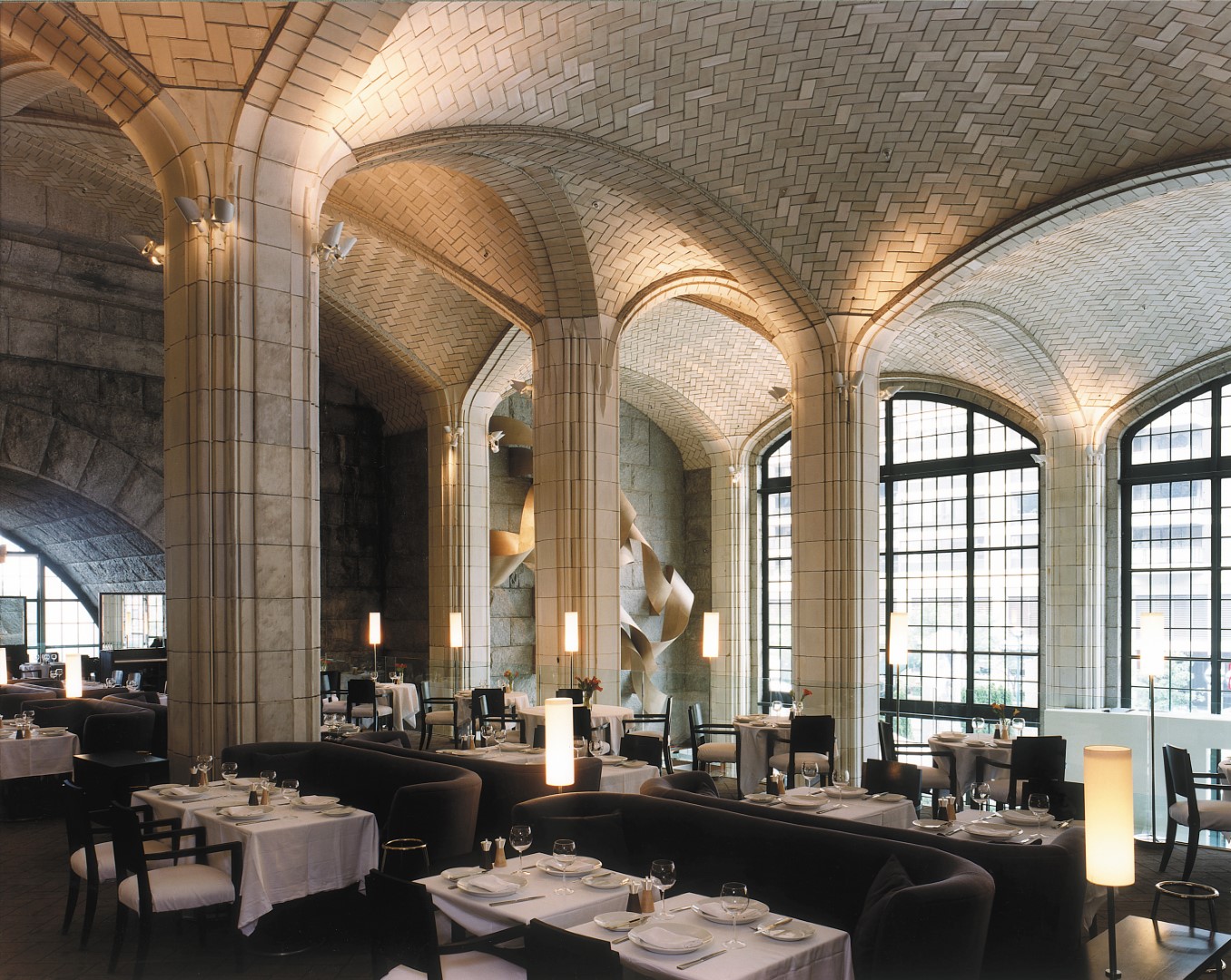
The Queensboro Bridge Bridgemarket project stands as one of the most significant and technically demanding masonry restoration projects ever undertaken. Completed in March 2000, the work transformed more than 98,000 square feet of vaulted space beneath the Queensboro Bridge into Bridgemarket, a public marketplace in Manhattan. The project is recognized as the first-ever rebuilding of Guastavino vaults and as one of the largest terra cotta repair and restoration projects in the world.
The original structure dates to 1914. Spanish architect Rafael Guastavino y Esposito designed the distinctive terra cotta barrel-vaulted ceilings using his signature self-supporting tile system -- 32 self-supporting domed vaults with ceiling heights ranging from 24 to 44 feet. By the time the Bridgemarket project began, the vaults had endured decades of exposure, deferred maintenance, and the cumulative effects of the urban environment beneath an active bridge deck.
The Guastavino System and Why This Project Was Historic
Guastavino vaults are among the most technically sophisticated masonry structures ever built in the United States. The system uses thin laminated terra cotta tiles, laid in multiple interlocking courses with Portland cement mortar, to create self-supporting shells that carry their loads through compression in the tile mass rather than through conventional arch supports. The vaulted forms achieve structural efficiency that allowed Guastavino to cover vast interior spans with relatively thin, elegant shells.
The challenge of rebuilding Guastavino vaults -- rather than simply repairing them -- had not been undertaken before this project. Reconstruction requires reproducing the original tile geometry, coursing patterns, and cross-bonded laying method in a way that restores the vault's structural behavior as well as its appearance. Graciano's crews were among the few in the country with the expertise and experience in Guastavino systems to execute this scope.
Scope of Work
Services Performed
- Terra cotta vault reconstruction using historical cross-bonded tile methods -- the first-ever vault rebuilding of this type
- Replacement and repair of 65 terra cotta panels and 13 granite base units
- Mortar joint removal and color-matched pointing with raised joint tooling
- Granite masonry pointing throughout
- Cleaning of stone surfaces and repair of surface cracks
- Removal and reset of misaligned terra cotta column covers where steel supports had corroded
- Waterproofing of vault surfaces
- Epoxy injection for crack repair
- Advanced waterproofing systems application
Scale and Complexity
The 98,000-square-foot scope encompassed 32 self-supporting domed vaults with ceiling heights ranging from 24 to 44 feet. The original terra cotta tile installation comprised more than 3,600 tiles, 1,728 trim border pieces, and 3,290 ornate field pieces. Matching tile profiles, colors, and mortar joint characteristics across this inventory required rigorous material sourcing and quality control throughout the project.
Color-matched mortar pointing with raised joint tooling is one of the most demanding aspects of Guastavino restoration. The original raised joint profile must be reproduced precisely by hand, and the mortar must match the original in color and compressive characteristics without exceeding the strength of the tile units. Across thousands of joints at height, this work requires skilled craftsmen with specific experience in the Guastavino system.
Corrosion and Column Cover Resets
Steel support members embedded within the original structure had corroded over decades, causing terra cotta column covers to misalign. The restoration addressed these conditions directly: covers were removed, the underlying steel was repaired, and covers were reset to proper alignment before the surrounding masonry and waterproofing work was completed. Failing to address corroded steel before resetting tile would simply restart the same failure sequence within years.
About Graciano Corporation
Founded in 1916, Graciano Corporation is one of the oldest and most experienced masonry and concrete restoration firms in the United States. Headquartered in Pittsburgh, PA, with additional offices in New York, NY, and Florida, Graciano performs approximately 90% of all work in-house with its own skilled journeymen. The company is a WBENC-certified Woman Business Enterprise and holds the deepest expertise in Guastavino tile systems, terra cotta restoration, and landmark-scale New York City projects of any firm in its market.